


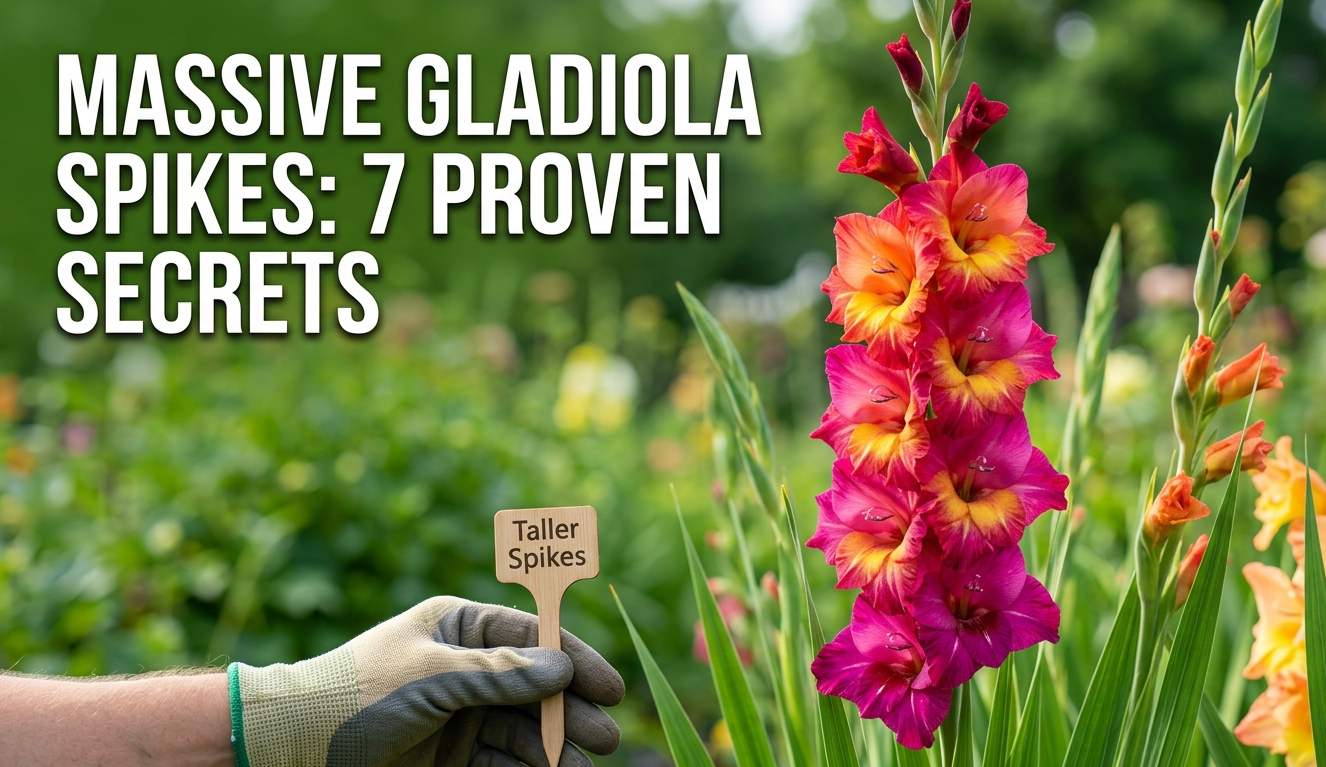
Gladiola bulbs need more than a frost-date check—they require warm soil and abundant sun to deliver those dramatic spikes you expect in the garden. This guide gives precise soil, temperature, planting depth, and timing advice for reliable gladiola flower displays, based on university research and real in-garden results. If you want consistent, tall blooms for cutting or borders, keep reading for exact soil pH, when to plant by soil temperature (not the calendar), how deep and how far apart to plant, season-long succession strategies, and practical troubleshooting to avoid common failures.
Key Takeaways
- Gladiola thrives when soil temperature hits 55-60°F, in full sun, and spaced properly for strong rooting—ignore the calendar, trust your soil thermometer.
- Most problems (weak stalks, rotting bulbs, late or failed blooms) come from cold soil, poor drainage, shallow planting, or late planting—simple fixes prevent these issues.
- Succession planting every 2–3 weeks until early July extends bloom for cutting; stop planting on time so corms mature before fall frost.
- Soil requirements for healthy gladiola growth
- Exact planting depth, spacing, and corm orientation
- Soil temperature and timing—when to plant gladiola bulbs (and avoid mistakes)
- Summary & Next Steps
- FAQ
Soil requirements for healthy gladiola growth
Strong gladiola flower spikes start with the right soil—these aren’t fussy, but the details matter more than most guides suggest. Gladiola prefers a well-drained loamy or sandy-loam soil, moderately fertile, ideally at pH 6.0–6.5. Drainage is non-negotiable. Roots rot fast in soggy or heavy clay—so amend with compost and coarse sand (not peat, which can go sour). Poor soil? Add 2–3 inches of compost and coarse sand to lighten and enrich. Mulch after planting keeps weeds down and holds consistent moisture—but don’t smother shoots, use just an inch or two.
When I amended a clay bed with compost and sand, my gladiolas rooted faster and produced stronger spikes. If your soil pH falls below 6, lime lightly and test again in 2 weeks.
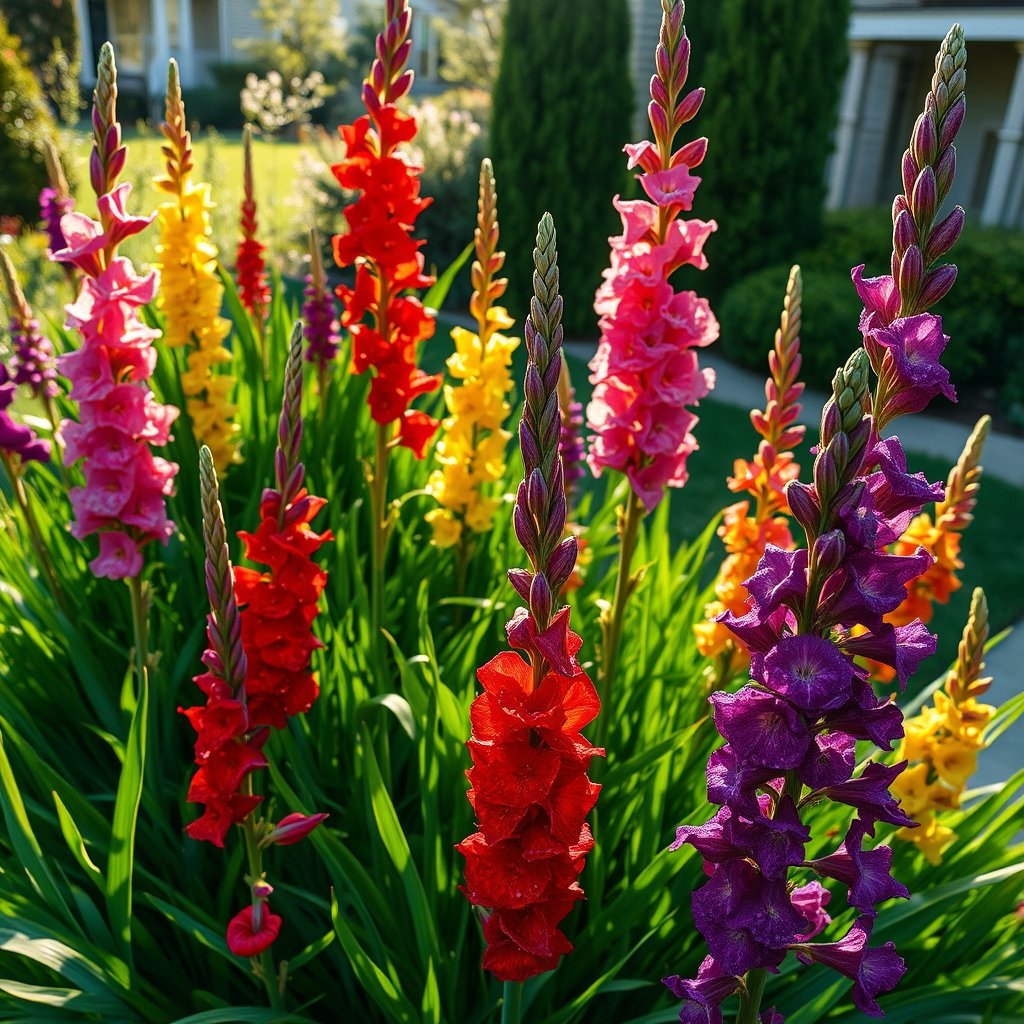
Avoid sitting water after heavy rain—if puddles linger, build up a raised planting ridge or install a simple 8-12 inch high raised bed. Interested in building your own? Check out our step-by-step raised garden bed guide for details.
Adding a thin mulch after planting not only helps control weeds but stabilizes moisture for uniform sprouting. Just don’t use a heavy layer that mats down—fine bark or leaf mold work best. You’ll see healthier gladiola bulbs and fewer weeds all summer.
Exact planting depth, spacing, and corm orientation
Forget “plant one knuckle deep”—precise depth matters. Use the “three times bulb height” rule for gladiola bulbs. Large corms (1–1.5 inches tall) go 4–6 inches deep; medium 3–4 inches; small 2–3 inches. Plant corms 4–6 inches apart, pointed tip up, with rows spaced 12–18 inches. In single rows, they’re easier to support, but groups of 7–9 make bolder bouquets and let foliage shade the roots.
I always measure corm height and plant three times that depth; it stopped the top-heavy stalks for good—no more wind-flopped spikes.
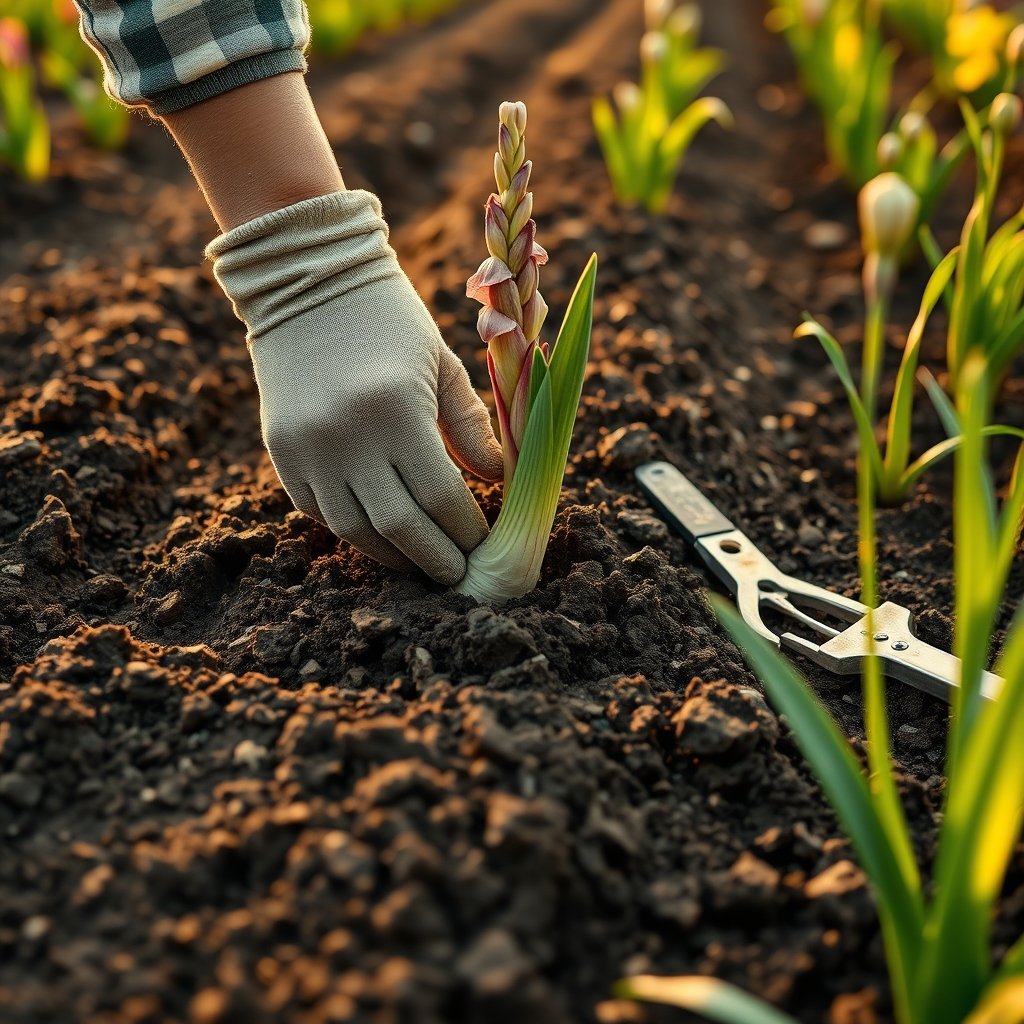
Firm the soil before and after planting to prevent air pockets—they’ll cause uneven sprouting. If your site gets heavy wind or frequent rain, push a slender bamboo stake beside each corm at planting time (6–8 inches tall at first—extend as growth shoots up). For big displays, use soft twine between stakes for tidy rows—don’t wait until flower spikes form or it’s too late to support them.
For hungry soils, add a balanced garden fertilizer like 5-10-5 mixed into the bottom of the trench, covering lightly before setting corms atop. Don’t let fertilizer touch the corm directly—it’ll burn new roots. Full planting method details, including best watering techniques, are in our seed germination guide.
After covering, water in well. If your spring is dry, add drip irrigation or a soaker hose—overhead watering splashes dirt on leaves, encouraging fungus.
Soil temperature and timing—when to plant gladiola bulbs (and avoid mistakes)
Don’t trust the calendar—calibrate your planting by soil temp, not last frost date. Gladiola corms sprout and root best at 55°F (13°C), thriving at 60°F (15°C). Too cold? Roots stall and bulbs rot—too late? Stalks can’t mature before frost. A basic soil thermometer (university experts recommend this) pays for itself. I waited until the soil hit 60°F on my thermometer and my first planting bloomed weeks earlier than my neighbor’s.
Timing Strategies:
- Start planting once your soil is 55–60°F at 4-inch depth, after frost danger is past (typically when trees leaf out—often 2 weeks after your last frost).
- For nonstop color, plant fresh bulbs every 2–3 weeks, up to early July (zones 4–7). Later planting stalls corm maturity before frost—especially important for those digging corms to store.
- Most varieties flower about 70–90 days after planting; count forward from each planting date for reliable cutting sequences.
| Zone | First Planting | Last Safe Planting | Lifting Needed? |
|---|---|---|---|
| 3–6 | Late April–Mid May (soil ≥55°F) | Early July | Yes—by frost |
| 7–8 | Late March–Mid April | Early July | Yes (zone 7), optional (zone 8+ mild winters) |
| 9–10 | February–March | Mid June (or late June for heat) | Usually left in ground |
Succession planting pays off—when I plant every 2–3 weeks, I can reliably plan vase-worthy gladiola flower spikes from July through September. For schedule nerds, mark your first planting, every next planting, and the “stop” date on a garden calendar (or use a waterproof checklist—mine hangs by the shed). Download a printable checklist at the end of this post.
Common Pitfalls & How to Dodge Them:
- Planting too soon in cold, wet soil: Roots rot or stall, foliage weak.
- Planting too late: No time to mature, risk of failure before frost.
- Ignoring depth: Shallow planting = floppy stalks, deep = delayed or no shoots.
- No staking for tall types: Stems snap under wind or rain weight.
- Poor drainage: Corm rot, poor sprouting—switch to raised beds if needed (see raised bed advantages here).
- Planting in shade: Gladiolas in less than 6–8 hours’ sun get few or zero flowers (source).
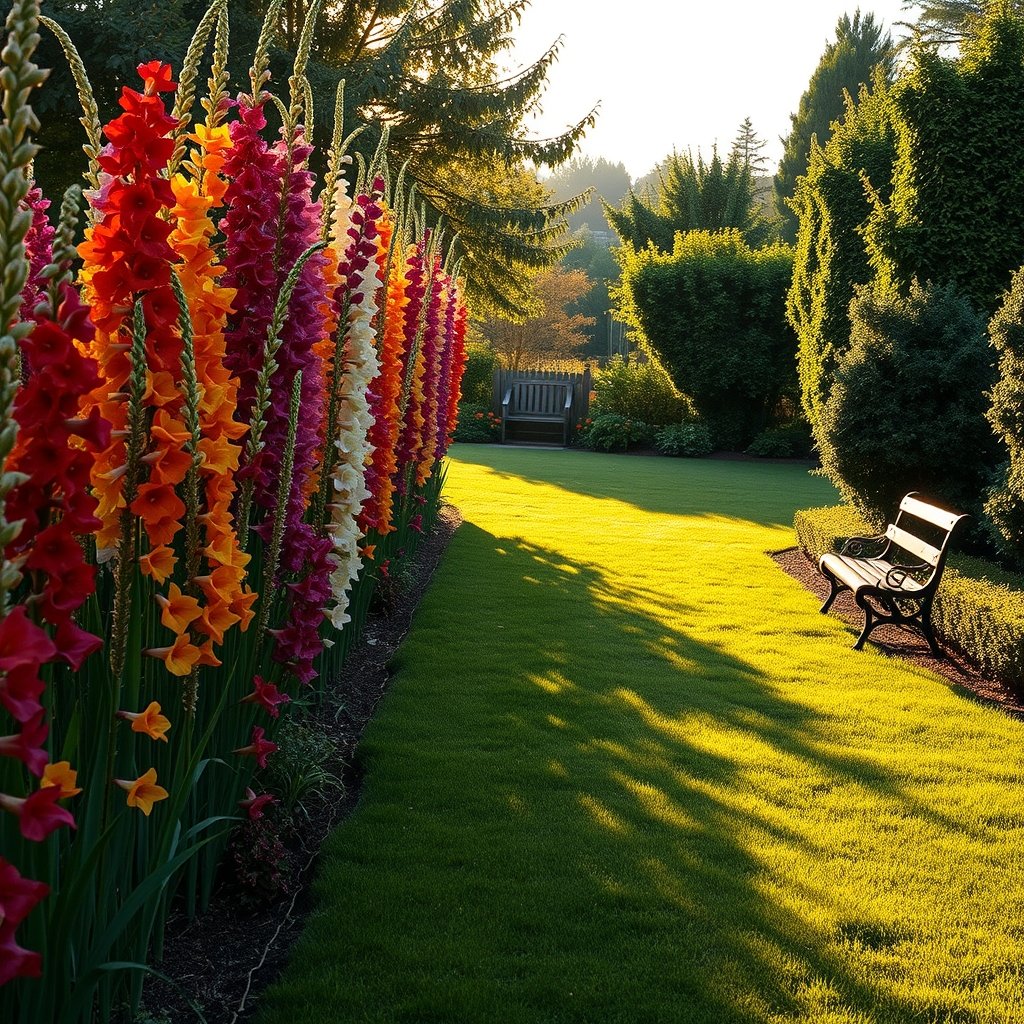
Quick personal lesson: I once planted in cold, wet soil and struggled with floppy stalks—now I check soil temp first and set a reminder for my last safe planting date. Miss either, and you’re gambling on your whole display.
Planning for winter? In zones 7 and colder, let leaves yellow, then lift corms before the first hard freeze (28°F or below). Cure in a mesh bag, then store dry and cool (40–50°F). The year I stored corms correctly, I got 90% survival over winter. More on storage in our comprehensive gladiolus guide.
Summary & Next Steps
The bottom line: Gladiola needs fertile, well-drained soil, precise planting depth, and soil temps above 55°F for best performance. Time your first plantings by thermometer, stagger for continuous blooms, and always stop by early July in cold zones. Stake early, water deeply but not constantly, and always allow enough time for corms to mature before frost. Stick to these details for consistently tall, showy spikes of gladiola—year after year.
Ready to plant or want a fail-proof reminder? Download or print our one-page gladiola planting checklist and zone calendar below. Have a question or want to share your first planting date and zone? Drop a comment! For more, browse our guide to seed germination techniques or compare raised bed ideas here. Need tools? Grab a reliable soil thermometer or our favorite gladiola starter kits on our resource page. Want to get creative? Check out the Jane magnolia tree guide or our low-maintenance plant tips for year-round garden beauty.
No matter your experience, stick to the steps above and enjoy cutting and arranging your own homegrown gladiola blooms for months!
FAQ
When should I plant gladiola bulbs?
Plant gladiola bulbs when the soil temperature is at least 55°F (13°C), ideally 60°F (15°C). This is usually after the last frost and when the ground is workable. Make repeat plantings every 2–3 weeks for a succession of blooms, but stop by early July so corms mature fully before fall frost.
How deep and how far apart do I plant gladiolus corms?
Plant corms roughly three times their height: large bulbs 4–6 inches, medium 3–4 inches, small 2–3 inches deep. Space corms 4–6 inches apart, with rows 12–18 inches apart. Always plant with the pointed tip upward and firm the soil well.
Do gladiolas need full sun and how much water?
Yes—gladiolas thrive in full sun, requiring at least 6–8 hours of direct sunlight daily for sturdy stems and prolific spikes. Provide about 1 inch of water per week, keeping the soil consistently moist but never soggy. Add mulch to lock in moisture and prevent weeds.
Should I lift gladiolus corms for winter?
In zones 7 and colder, let foliage die back, then lift corms before the first hard freeze (below 28°F). Cure and store dry in a cool, ventilated space. In warmer zones (8–10), you can often leave corms in the ground if soil drains well and winters are mild.
Why did my gladiolus topple over or not bloom?
Toppling usually means the corm was planted too shallow, the soil was cold or poorly draining, or tall spikes weren’t staked early. Sparse or absent blooms happen with too little sun, poor fertility, or late planting. Check depth, sun, drainage, and support for best results.
—