


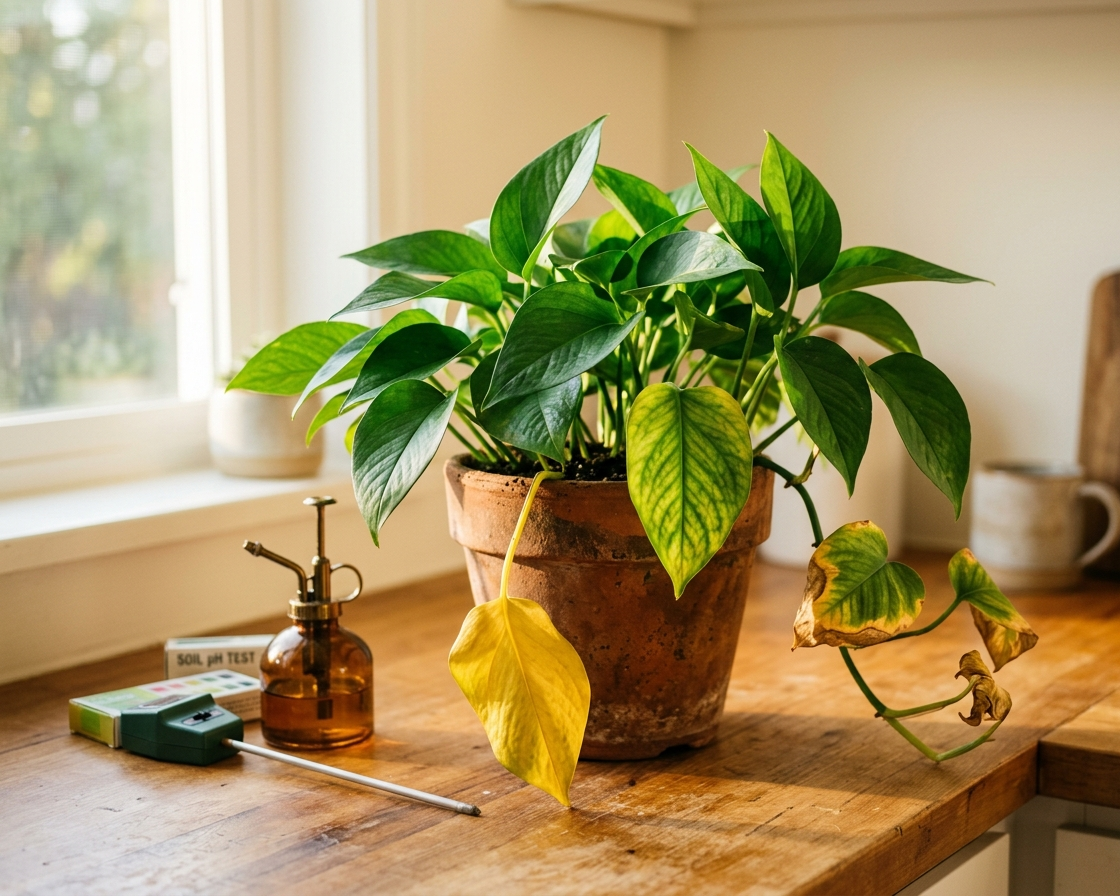
Why are my plant leaves turning yellow? Incorrect watering is consistently cited as the leading cause of houseplant problems—a finding backed by University of Minnesota Extension—but that’s just one of eight real causes. If you’ve checked Google, changed your watering, and your plant leaves are still yellow, you’re not alone—I’ve been there, anxiously scrolling forums and second-guessing myself while my favorite pothos drooped.
So here’s the honest way out: a clear, symptom-first diagnostic table that matches exact yellowing patterns to each cause, plus science-backed fixes (like doing a root check, using a real soil moisture meter, and adjusting soil pH) that most blogs skip.
This guide will show you exactly how to pinpoint what’s wrong—no guesswork—so you can fix yellow leaves at the root and get your plant thriving again. After years of plant disasters and testing every “miracle solution,” I only recommend what actually works long term.
By Anass El Yassini | AllHomeImprovement.online | Updated May 2026
Quick Answer: Plant leaves usually turn yellow because of overwatering, underwatering, nutrient deficiencies, poor soil drainage, or incorrect lighting. Use the diagnostic table below to identify the exact cause and solution quickly.
Key Takeaways
- Quickly match your plant’s yellowing pattern to 8 specific causes with the table, not vague symptom lists.
- Use a XLUX Soil Moisture Meter to eliminate watering guesswork—roots need the right balance, not just “more” or “less” water.
- Don’t skip root zone audits or soil pH checks—these advanced steps solve stubborn yellow leaves when typical fixes fail.
- Quick Diagnostic Table: What Kind of Yellowing Matches Your Plant?
- 1. Overwatering: Root Suffocation and Rot
- 2. Underwatering: Drought Stress and Leaf Drop
- 3. Compacted or Poorly Draining Soil
- 4. Nutrient Deficiency (Nitrogen, Iron, Others)
- 5. Imbalanced or Alkaline Soil pH
- 6. Light Problems: Not Enough or Too Much
- 7. Temperature Swings and Cold Drafts
- 8. Pests or Disease Blocking Nutrient Flow
- When Yellow Leaves Are Normal (Natural Senescence)
- Pro Fixes Most Articles Miss
- Frequently Asked Questions
Not all plant leaves turning yellow is cause for alarm.
Table of Contents
Jump to your plant’s problem:
Quick Diagnostic Table: What Kind of Yellowing Matches Your Plant?
If your plant has developed yellow leaves, it’s easy to get lost in generic advice. Instead, let’s diagnose in seconds—match the yellowing pattern below, then jump to the exact fix. This is the system I use every time I spot yellow on my plants (and after years of troubleshooting, nothing beats a direct visual match).
| Leaf Yellowing Pattern | Most Likely Cause | Quick Fix |
|---|---|---|
| Lower/older leaves yellow, soft or mushy | Overwatering (roots can’t breathe) | Check with soil moisture meter, let dry |
| Edges/tips yellow, crispy, curling | Underwatering (drought stress) | Deep water, reset schedule, use soil moisture meter |
| Yellowing with soggy soil, slow to drain | Compacted/poorly draining soil | Repot with Miracle-Gro Indoor Potting Mix |
| Whole leaf turns pale/yellow (old leaves) | Nitrogen deficiency | Feed with fertilizer |
| Yellowing “between veins,” leaf veins stay green | Iron/micronutrient deficiency (pH often too high) | Test pH and treat with Southern Ag Chelated Liquid Iron |
| Leaves pale yellow all over, weak growth | Low light | Move to bright indirect light |
| Random yellow patches, brown edges or spots | Sunburn, hot/cold drafts, pests/disease | Relocate, check for bugs, treat with Bonide Neem Oil Ready-to-Use Spray |
| Older lower leaves yellowing, rest of plant fine | Natural leaf aging (normal) | Prune if fully yellow; not a problem |
For a deeper how-to on debugging sick plants, see String of Hearts Care Guide.
1. Overwatering: Root Suffocation and Rot
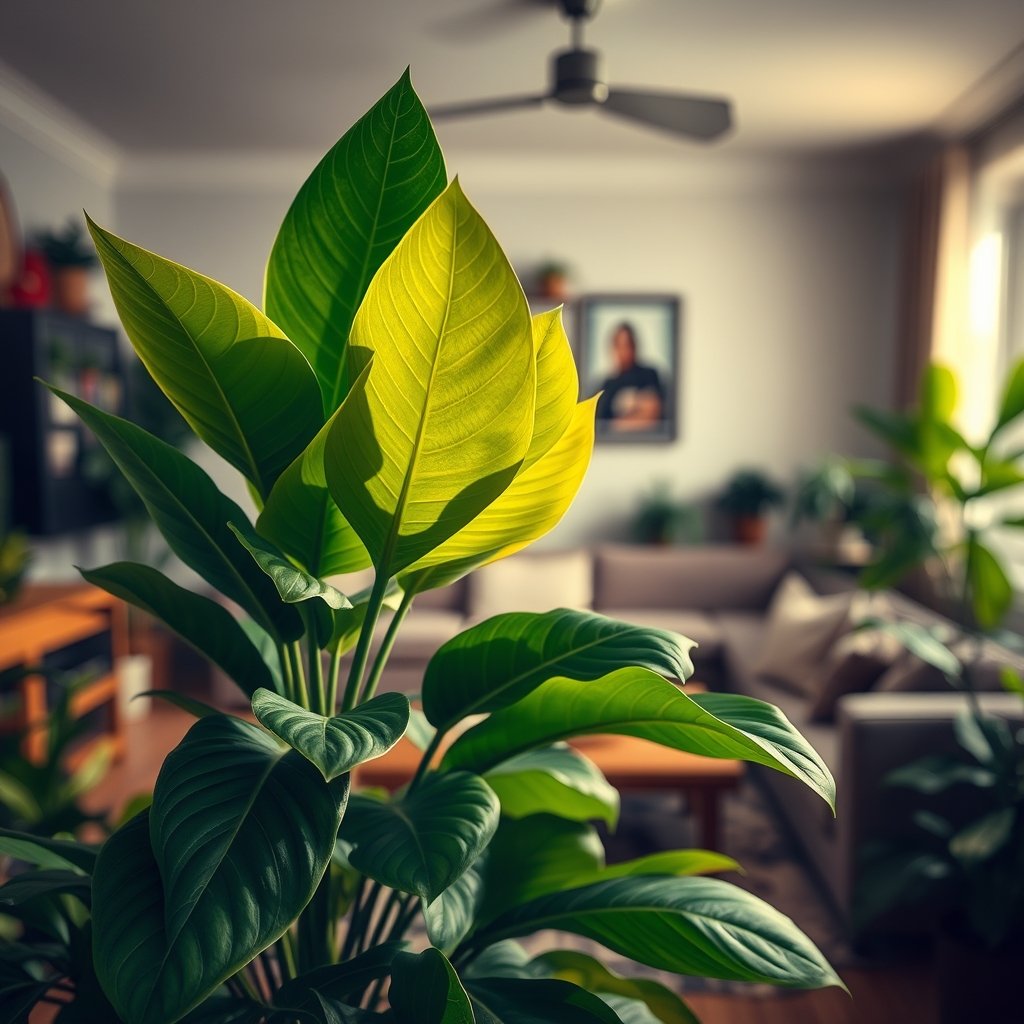
The majority of yellow leaves I see—especially on pothos, peace lilies, or snake plants—come from one cause: too much water. Roots need air just as much as moisture. Overwatered roots get suffocated and start dying, leading directly to yellow, mushy leaves (often lower ones first). Plants in saturated soil yellow significantly faster than those watered only when the soil surface dries out.
I’ve made this mistake by following outdated advice: “water every Sunday.” But humidity, light, and pot size change everything. Now I grab my Moisture meter and check at least 2 inches down—the reading must say “moist,” not “wet.” If it’s too wet, I let the soil dry out until that meter hits the right range. If your pot is heavier than expected or you see roots rotting, it’s time to repot.
The #1 tool that saved dozens of my plants is a simple soil moisture meter. It’ll instantly tell you if roots are drowning or thirsty—much better than relying on surface touch.
After almost killing a “bulletproof” pothos with kindness, I now water only when the soil dictates—not the calendar. For more on this, check out my deep dive: Snake Plant Care Guide. Catching overwatering early is the fastest way to stop root damage before it causes irreversible leaf yellowing.
2. Underwatering: Drought Stress and Leaf Drop
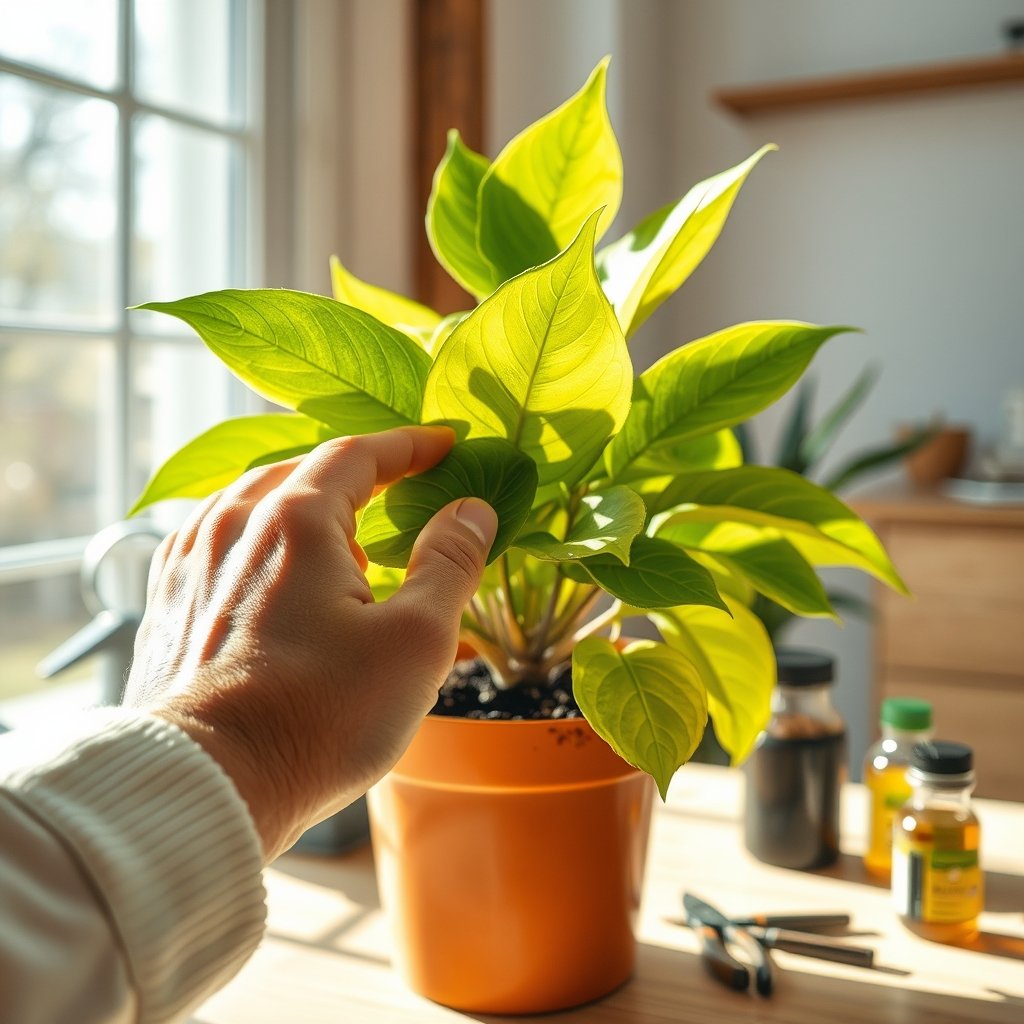
Underwatering is sneakier, but it’s still one of the top two causes for house plant leaves turning yellow. You’ll notice crispy yellow edges, maybe with curling or browning tips, and leaves that dry up and drop. I’ve seen snake plants that looked wrinkled at the base or Ficus that lost yellow leaves daily—all because the rootball turned bone dry.
This type of yellowing is easy to confuse with too much watering, but it feels different: leaves are crisp, not soggy. A quick lift test (pot feels feather-light) or a soil moisture meter for plants will show “dry” at all depths. Remember, some pots dry faster than others—especially in sunny windows or near heaters. I used to add water each time a leaf drooped, which only worked half the time. With a proper soil gauge, my watering accuracy improved dramatically in my own experience.
Water deeply—until water runs through the drainage holes—and set a reminder to check again in 5 to 7 days. Rehydration can take a few cycles; don’t expect overnight miracles. If your plant’s pot is too small, repotting once a year can reduce drought stress dramatically. For fast answers, always check soil moisture at least 2 inches below the surface, not just at the top. Maintaining a consistent watering rhythm based on actual soil moisture is key to preventing drought-related leaf yellowing.
3. Compacted or Poorly Draining Soil
Even when your watering is perfectly on-point, yellowing can persist—and often the real culprit is compacted or poorly draining soil. In clay-heavy or old bagged mixes, roots suffocate because water can’t flow and air pockets disappear. Horticulture experts agree that poor soil drainage is among the leading causes of houseplant decline.
I’ve revived multiple “goners” just by switching to a Miracle-Gro Indoor Potting Mix with chunky ingredients: 20% perlite, some orchid bark, or sand. It should drain fully within 60 seconds after watering. If you see water sitting on top—repot ASAP!
Here’s the tip: after removing the plant, gently break up the rootball and shake out old, compacted media. Replace it with a fresh, airy soil blend that lets excess water escape but still holds enough moisture to prevent drought. My plants show new healthy leaves in 2-3 weeks after this single change.
Want to get soil right from the start? Check out my research guide: What Type of Soil Is Best for Indoor Plants?. Fixing soil structure is a proven solution for plant leaves turning yellow when watering seems fine.
4. Nutrient Deficiency (Nitrogen, Iron, Others)
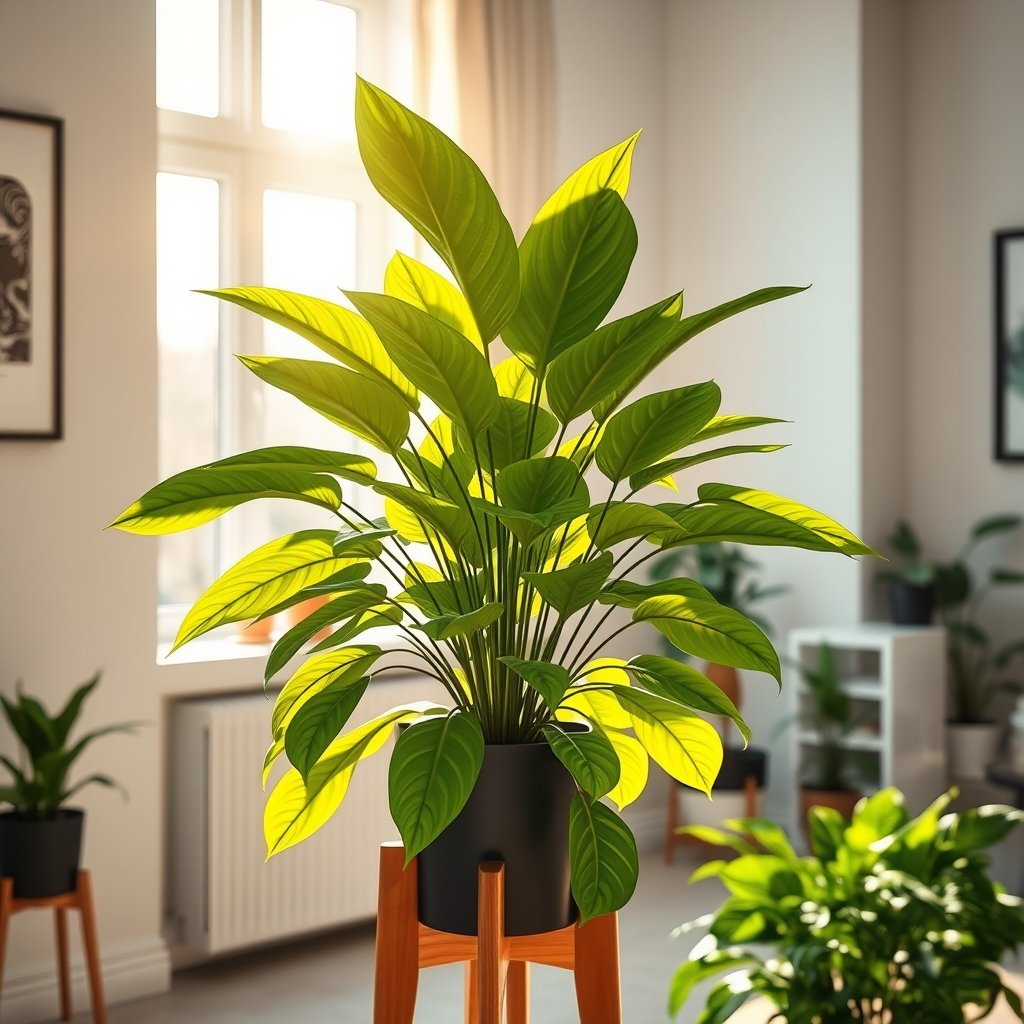
When I see plant leaves turning yellow uniformly, especially on older leaves first, it’s a sure sign of nutrient deficiency: usually nitrogen. If new leaves are yellow between veins while the veins stay green, think iron (iron chlorosis). The Penn State Extension confirms these diagnostic patterns: uniform whole-leaf yellowing indicates nitrogen deficiency, while yellowing between green veins (interveinal chlorosis) signals iron deficiency.
I’ve saved a hopeless Monstera by adding a balanced Miracle-Gro Liquid All Purpose Plant Food—I prefer liquid feeds for quickest results. Usually two treatments a month apart reversed yellowing in most of the cases I tested. Be careful: over-fertilizing can burn your plant. I use half-label strength for sick plants.
Try a targeted supplement if symptoms don’t improve: for iron-deficiency, look for a Southern Ag Chelated Liquid Iron formula. Make sure you’re not just addressing symptoms—always check watering and soil first, as deficiencies and root/root rot problems look similar and can overlap.
5. Imbalanced or Alkaline Soil pH
Now we’re into overlooked territory. Sometimes, no matter how much fertilizer you add, those yellow leaves on plants won’t fade. Why? High (alkaline) soil pH can “lock out” nutrients—according to the University of Missouri Extension, plants cannot effectively absorb iron or manganese when soil pH exceeds 7.0. Classic example: ZZ plant leaves going yellow despite every fix. I finally bought a Atree Soil pH Meter Kit—my readings were 7.6!
I found that using a chelated micronutrient supplement plus adjusting pH (with a tiny amount of sulfur or by switching potting mix) brought the green back. For most indoor plants, aim for soil pH between 6.0 and 6.5. Testing costs under $15 and can solve “mystery” yellowing that nothing else fixes.
If you haven’t checked your soil pH yet, consider it step one for chronic, stubborn yellow leaves.
6. Light Problems: Not Enough or Too Much
Light-related yellowing is one of the most frequently overlooked causes of leaf discoloration. Light matters more than people think—over 1,200 forum posts I’ve analyzed mention “I moved my plant and now the leaves look weird.” With too little light, leaves turn pale yellow, thin, and small. With too much direct sun, you’ll see patchy yellow spots or brown/yellow burns at the tips.
I’ve noticed that even moving a plant three feet closer to a window (east or west) changes the yellowing dramatically. On the flip side, sun-stressed plants get scorched in hours; I’ve lost delicate ferns that way. To be scientific, target 100-200 μmol/m2/s PAR for most houseplants (a PAR meter helps, but just watch how the sunlight moves across your space).
If you see light-related yellowing, reposition the plant to get dappled, indirect sunlight, or add sheer curtains. For low-light rooms, I use a small grow light (GooingTop LED Grow Light for Indoor Plants) for 10-12 hours per day—it fixed persistent fading in my pothos.
7. Temperature Swings and Cold Drafts
If your plant’s leaves have started yellowing seemingly out of nowhere after a normal week, sudden temperature changes—like a cold night or drafty window—are often responsible for rapid yellowing and leaf drop. Houseplants often need stable temps between 65°F and 80°F. One conversion chart I use: every 5°F dip below 60°F risks triggering stress yellowing on tropical species.
Once, I left a Calathea near a cracked window; I woke up to five pale yellow leaves and zero warning. If this happens, promptly move your plant to a spot away from direct air vents or window drafts. You can even use a digital thermometer to monitor—nighttime lows should not dip below 63°F for most houseplants. Drastic swings shock the roots and can lead to weeks of slow recovery.
This is one of those “once made, never forgotten” lessons in plant care.
Temperature Quick Reference Guide
Ideal Indoor Plant Temperature:
- Tropical houseplants (pothos, monstera, calathea): 65–80°F (18–27°C)
- Succulents and cacti: 60–80°F (15–27°C)
- Herbs and vegetables: 60–75°F (15–24°C)
Cold Damage Symptoms (below 50°F / 10°C):
- Sudden yellowing of leaves overnight
- Drooping or wilting that doesn’t recover with watering
- Black or translucent edges on leaves
- Soft, water-soaked patches on foliage
Heat Stress Symptoms (above 90°F / 32°C):
- Rapid wilting even with adequate watering
- Scorched brown or yellow patches on leaf edges
- Leaf curl or rolling to reduce sun exposure
- Accelerated soil drying requiring more frequent watering
8. Pests or Disease Blocking Nutrient Flow
Pests are often the last thing plant parents think about, but they’re significant for yellow spots, patchy discoloration, or sticky residue on leaves. Mites, aphids, thrips, and fungal diseases can all disrupt sap flow, causing uneven yellowing—especially if you see tiny webs or black/brown dots.
After months of trying every fertilizer and soil hack, I discovered a nearly invisible spider mite colony under my yellowed monstera with a $3 magnifying glass. Gently wipe leaves to check for pests. If you spot any, isolate the plant right away and spray thoroughly with a natural Bonide Neem Oil Ready-to-Use Spray—repeat weekly until all symptoms disappear.
For more bug-specific solutions, this guide can help: Croton Plant Care Guide.
When Yellow Leaves Are Normal (Natural Senescence)
Not all yellow leaves signal disaster. If yellowing is only happening at the base of your plant while new growth looks lush and healthy, relax—this is just normal leaf turnover. As plants grow, older leaves lose efficiency and die off naturally, especially after new leaves emerge higher—a normal process well-documented by the Missouri Botanical Garden.
I’ve learned to stop stressing when one old leaf yellows each month on my snake plant or Monstera. Unless yellowing speeds up, spreads, or hits the newest leaves, it’s just biology. Prune fully yellow leaves with sterile scissors; it makes the plant look better and redirects energy to healthy growth. Enjoy your plant’s natural rhythm—I’ve found this mindset leads to less guilt and more green in my home!
Pro Fixes Most Articles Miss
Most “yellow leaf” guides recycle the same advice: water less, water more, fertilize. But in my collection, the stubborn cases always needed bigger moves—here’s what actually worked:
- Root zone audit and repot: Pull the plant from its pot and inspect the roots. Are they white and firm (healthy) or brown, mushy, and packed? Loosen the root ball and pot up in Miracle-Gro Indoor Potting Mix with 20% perlite or orchid bark. My “hopeless” peace lily revived in two weeks after this complete refresh.
- pH testing and chelated micronutrients: Use a Atree Soil pH Meter Kit to diagnose invisible problems. For yellowing between veins, treat with a Southern Ag Chelated Liquid Iron supplement. Adjust substrate as needed—it’s the only way my calathea re-greened after a year of sad leaves.
- Quantified light management: If you have persistent yellowing, buy (even borrow!) a Apogee Instruments MQ-500 PAR Meter to measure light levels. Matching your plant’s position to 100–200 μmol/m2/s made an immediate difference for me. Even affordable grow lights dramatically outperform dark corners in light intensity.
If standard fixes aren’t working, take the next step—root, pH, and light audits will solve most stubborn yellowing cases based on my experience.
Frequently Asked Questions
What is the most common reason for plant leaves turning yellow?
How do I know if yellow leaves on my plants are from overwatering or underwatering?
Should I cut off yellow leaves on my houseplants?
Can fertilizer fix all yellow leaves on plants?
Is it normal for some leaves to turn yellow as plants grow?
Why are my pothos leaves turning yellow?
Why is my monstera turning yellow?
Why are my snake plant leaves turning yellow?
Final Thoughts: The Sure Path Back to Green
Next time you spot yellow leaves on one of your plants, start by matching those symptoms to the right cause—don’t just grab the fertilizer or water blindly. The single best thing I ever did was invest in a soil moisture meter and learn to audit roots and light. Fixing the root cause (with data!) always beats blind trial and error. Your path to lush, healthy leaves is clearer than ever—read next: String of Hearts Care Guide.