


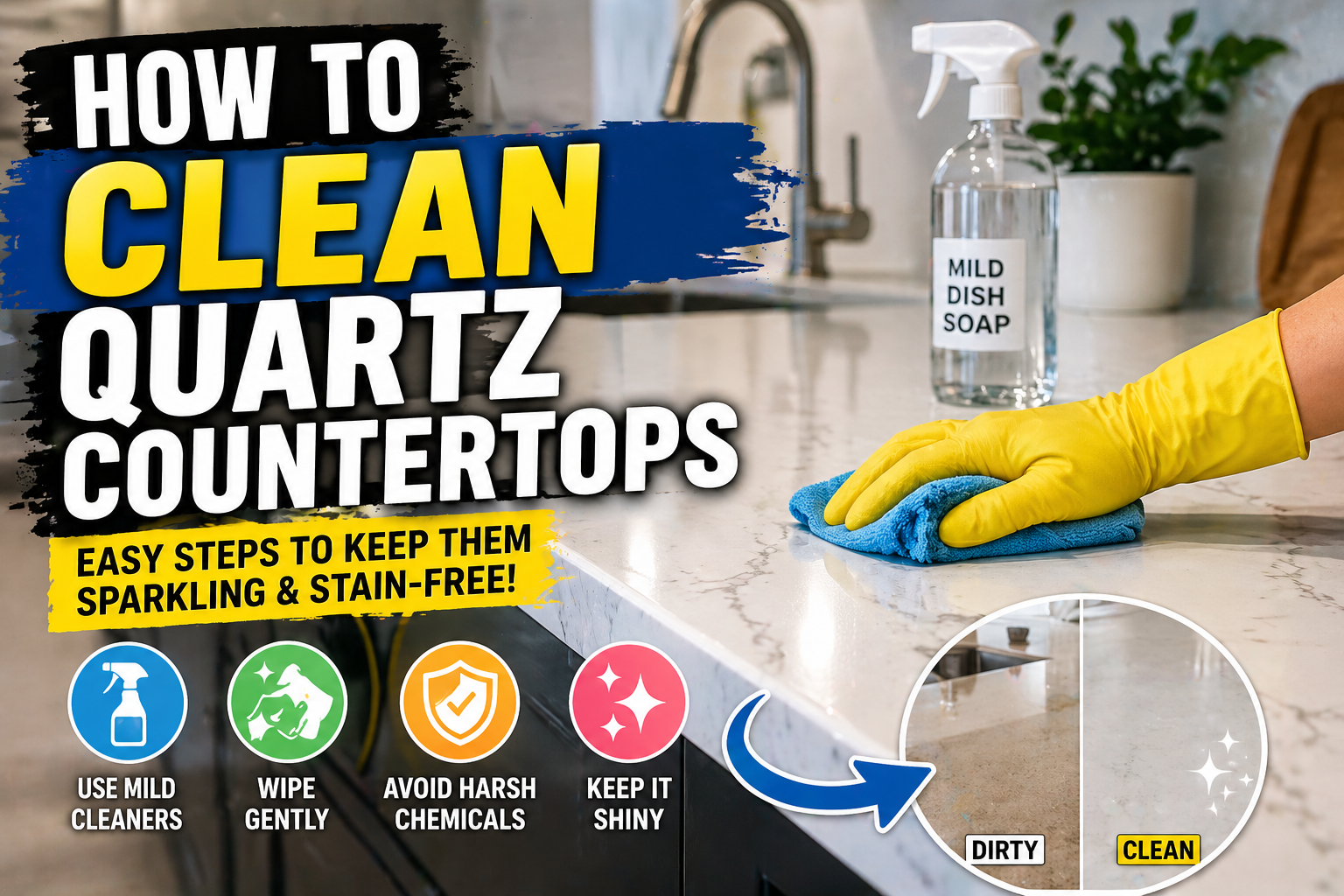
How to clean quartz countertops the right way means more than just wiping up crumbs—it’s about understanding the science behind engineered stone and how to keep your investment spotless, bright, and damage-free for years. Most guides skip the technical limits that can ruin white quartz countertops: heat, UV, and harsh cleaners. Here’s a proven, manufacturer-safe approach for everyday care, stain emergencies, and long-term maintenance—so you’ll know exactly what to use, what to avoid, and how much repairs really cost.
Key Takeaways
- Quartz countertops are low-maintenance but easily damaged by heat, harsh chemicals, and prolonged sunlight—know their real limits before you clean.
- Daily care is simple: use mild dish soap, warm water, and a microfiber cloth—beware of “shortcut” cleaners and avoid abrasive pads at all costs.
- Repair costs for mistakes can be $150–$2,500—use trivet, avoid bleach, and act fast on stains to keep your white quartz looking new and cost down.
- Quick overview — why quartz is low‑maintenance but not invincible
- Everyday cleaning — safe routine for spotless surfaces
- Advanced analysis & common pitfalls
- Conclusion
- FAQ
Quick overview — why quartz is low‑maintenance but not invincible
Quartz kitchen countertops are a top choice for modern homes, blending natural stone looks with easy care. Engineered quartz combines 90–95% crushed natural quartz with durable polymer resins and pigments, creating a non-porous, stain-resistant surface. Unlike granite, quartz never needs sealing, and resists bacterial growth (The Spruce). But “stain-resistant” is not “stain-proof.” Bleach can discolor the resin, acid can etch, and high heat or direct sunlight can leave lasting marks—especially on white quartz countertops.
Recent industry stats: in 2024, engineered quartz kitchen countertops made up about 14% of the global countertop market (≈ USD 6.8 billion of USD 48.6 billion for quartz + granite). Yet about 13% of quartz owners report at least one stain or cleaning issue, compared to 21% for granite (Intel Market Research). The most reported stain risks: coffee, red wine, oil, acidic spills, and hard water deposits (Blue Sky Countertops).
Keeping your quartz like-new for years is all about matching your cleaning and use to what the material can safely handle. Let’s break down the right daily routine and what to absolutely avoid.
Everyday cleaning — safe routine for spotless surfaces
Here’s how to clean quartz countertops safely, day in and day out—no fancy products or special skills required:
- Blot up spills immediately—especially coffee, wine, or oil, which can seep in and create persistent stains.
- Mix a few drops of mild dish soap in a bowl of warm water.
- Dip a soft microfiber cloth (never abrasive pads) in the mix, wring out, and gently wipe the surface. Don’t soak—excess water along edges or seams can eventually damage the resin binder.
- Dry with a clean towel or a fresh side of the microfiber. Streaks? Buff lightly after all moisture is gone.
Manufacturers agree: the resin binder makes quartz stain-resistant—not stain-proof (O’Brien Cut Stone). Coffee, wine, and oil stains are easier to prevent than to remove.
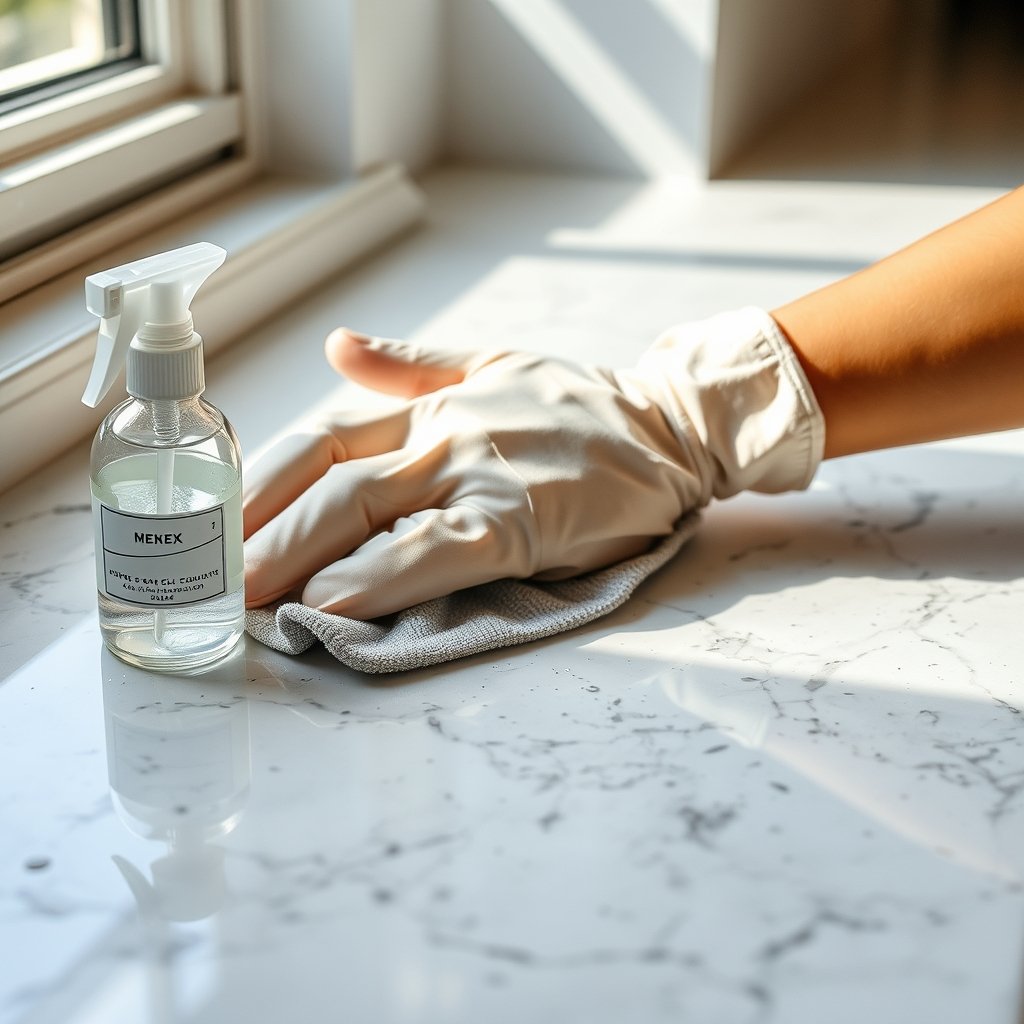
- Never use bleach, vinegar, or citrus-based cleaners—these will break down resin over time and cause yellowing or dullness, especially on white quartz countertops.
- For regular touch-ups, a spritz of isopropyl alcohol followed by a dry wipe can lift minor fingerprints without damage.
- How do you clean quartz countertops after raw meat or sticky foods? Mild soapy water is enough—quartz is non-porous.
For DIY types planning a kitchen revamp, see our guide on how to paint kitchen cabinets for easy ways to refresh your whole kitchen look along with your counters.
Advanced analysis & common pitfalls
No matter how careful you are, certain mistakes can happen with quartz kitchen countertops. Here’s what the research and real owners report most often—and how to spot or prevent these issues:
| Pitfall | What Happens | Prevention / Solution | Real-world Cost |
|---|---|---|---|
| Heat damage (hot pans) | Resin melts, cracks, or yellows above 150 °C (302 °F) | Always use trivets/hot pads; Never place hot pans directly on quartz | $150–$500+ for surface repair; $800–$2,500 slab replacement |
| Bleach or chlorine-based cleaners | Resin discoloration, permanent dull spots | Use only pH-neutral cleaners (pH 6–8)—not bleach or ammonia | Permanent stains may require pro resurfacing ($100–$200+) |
| Acids (vinegar, lemon, citrus) | Etched or dulled surface, resin breakdown | Wipe spills immediately; avoid acidic cleaners | May need pro buffing ($100–$200) |
| UV exposure (sunlight) | Yellowing on white quartz countertops over months/years | Use shades; install UV film on windows in sunny kitchens | Usually irreversible; replacement may be needed |
| Abrasive scouring pads/powders | Scratches, dullness | Only use microfiber or soft cloth; never scrub pads | Surface repolishing $150–$300 |
| Delayed spill cleanup (coffee, oil, wine) | Staining/”shadow” patches | Immediate blotting, or use mild degreaser then rinse | DIY fixes, or pro cleaning $100–$200 |
For deeper cleaning or persistent stains, check out our proven kitchen organization and air quality guide for upgrades that keep both air and surfaces clean and healthy year-round.
Always ask your installer about edge sealing, silica dust protection during fabrication, and what their warranties actually cover. For eco-conscious buyers, ask about low-VOC and safer resin content. To learn about smart ways to keep other surfaces easy-care, see kitchen essentials 2026 for tips that complement a quartz upgrade.
Conclusion
Quartz countertops deliver style and low-maintenance durability, but only if you respect their chemical and heat limits. The recipe for a clean, bright surface is simple: use only gentle cleaning products, wipe spills immediately, and keep hot items and harsh chemicals away. If your countertops need more help, know that surface repairs average $150–$300, while ignoring big issues may force a costly $800–$2,500 slab replacement. Make these habits part of your routine, and you’ll master how to clean quartz countertops for life. Want more pro home tips? Subscribe or browse our full list of low maintenance home care guides.
FAQ
Can I use bleach to clean quartz countertops?
No. Bleach (and any chlorine-based cleaner) can break down and discolor the resin, especially on white quartz. Stick with mild dish soap and water.
Why is my white quartz countertop turning yellow?
Prolonged sunlight exposure (UV) and harsh cleaning chemicals are the main causes of yellowing. Use window films or shades, and always avoid bleach or acidic cleaners.
Do quartz countertops need sealing?
No. The resin binder makes quartz non-porous and sealing is not needed. Just clean with soap and water as recommended.
What should I do if I spill red wine or oil?
Blot immediately. For oil, use a mild degreaser and rinse with warm water. For wine, lay a soapy cloth on the stain for 15 minutes, then wipe clean. Never scrub abrasively.
What’s the best way to protect my quartz countertop from heat?
Never place hot pans or trays directly on the surface. Always use trivets or hot pads. Resin begins to degrade above about 150 °C (302 °F).